
What’s Next for Climate Action in a Fragmented World?
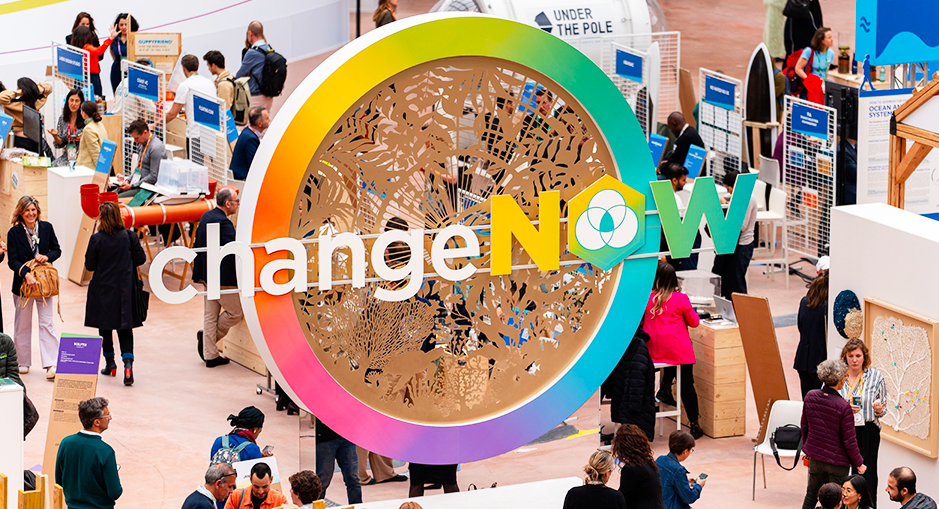
Ten years after the Paris Agreement and the U.S. withdrawal under Trump, climate leaders and academics convened at ChangeNOW 2025 to explore a path forward: a new reset for international cooperation. The future of climate action depends not on new promises, but on meaningful delivery — before it’s too late.
10 Years After the Paris Agreement: A Milestone Marked by Uncertainty
At COP21 in 2015, 195 nations agreed on a plan to keep global warming below 1.5°C. The Paris Agreement became a rare symbol of global unity and ambition. A decade later, at ChangeNOW 2025, that optimism has waned. Wars in Ukraine and Gaza rage on. The U.S. has once again pulled back. Faith in multilateralism is fading.
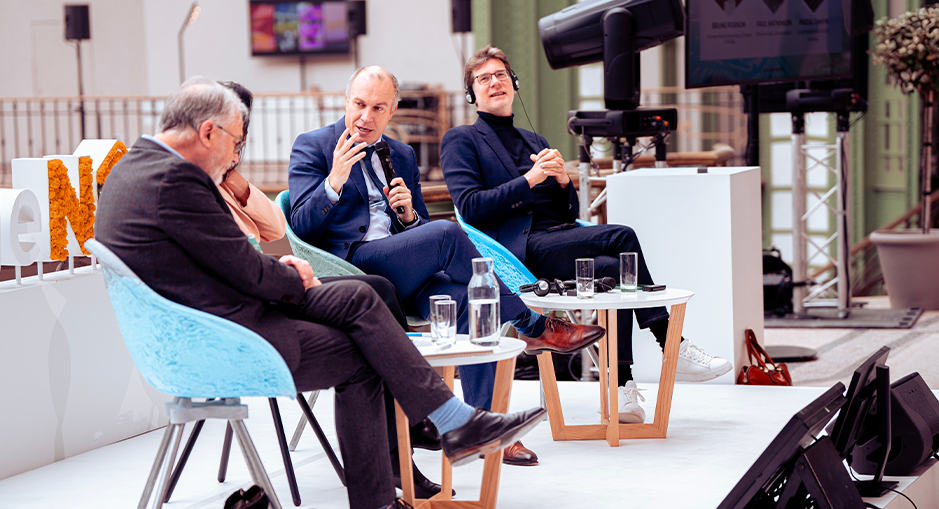
“The world is right now in a very different state than it was 10 years ago, and the spirit of multilateralism, the spirit of cooperation that brought us the Paris Agreement is now clearly in tatters. There are conflicts raging all over the world,” said Paul Watkinson, senior advisor to the COP28 presidency and former lead negotiator for the Paris Agreement. He was speaking at an HEC Paris-hosted panel during ChangeNOW 2025 titled “Lessons from the Past: Shaping the Future of International Climate Action.”
“Peace is a fundamental condition of the transition,” added Professor François Gemenne, HEC Paris professor, Academic Director of the Master in Sustainability and Social Innovation, and lead IPCC author. “Without it, climate cooperation breaks down.”
The US Withdrawal from Climate Negotiations: An Opportunity?
Professor Gemenne put America’s climate disengagement into perspective, noting this isn’t the first time the U.S. has stepped away. The first withdrawal came in 2017 under President Trump, before President Biden rejoined the accord.
He also referenced a historical precedent: in 2001, the U.S. left the Kyoto Protocol negotiations — which paradoxically made it easier for the remaining countries to reach agreement.
“The US withdrawal allowed for a kind of clean start,” Gemenne explained, emphasizing that in recent years the U.S. has often slowed negotiations and blocked adoption of key mechanisms. “So perhaps the fact that we now can do without the US can be an opportunity to bring new instruments, to forge new alliance and hopefully to implement much better than we've done so far.”
Brune Poirson, former French Secretary of State for Ecology and author of the Circular Economy Law, agreed. She reminded the audience that without the U.S., the Paris Agreement might have been binding. What some saw as a setback, she framed as a chance to reset and broaden the system beyond national governments.
Why Multilateralism Still Matters
International cooperation remains the backbone of global climate action — even in its flawed form.
“Multilateralism is frustrating, slow, and imperfect,” said Watkinson. “But it remains the only tool we have to bring governments together — and crucially, to amplify the voices of smaller nations.” He cited the Marshall Islands’ role in securing the 1.5°C target as proof that even the smallest actors can shape global norms.
He outlined the Paris Agreement’s key achievements: setting the temperature goal, creating a bottom-up approach for national contributions, enforcing top-down transparency rules, and mobilizing non-state actors like cities and companies. Still, he noted, "this is not enough."
From Goals to Delivery: The Urgency of Implementation
There was clear consensus among panelists: it is time to move from setting targets to delivering outcomes.
“It's not the time for new negotiations,” said Pascal Canfin, Member of the European Parliament and key architect of the EU Green Deal. “It’s the time for implementation.”
Watkinson argued that COP must evolve into a platform for delivery, collaboration, and finance reform — especially for the Global South. “It's not enough just to have statements; they have to be transformed into action,” he said of the upcoming COP30 in Brazil.
Poirson added that the narrative must shift: the Paris Agreement should be understood not as a technical accord but as a social contract requiring engagement from ministries of finance, trade, and industry — not just the environment.
Europe’s Role: Between Green Deal and Global Influence
As the U.S. retreats, Europe must fill the void — but its leadership is under political strain. The European Green Deal, launched in 2019, aims to make the EU climate-neutral by 2050. Yet it now faces growing resistance, with far-right parties, populist leaders, and major economies like Germany and France calling for "simplification" in the name of competitiveness.
“We’re being questioned,” Canfin admitted. “But the Green Deal is more than climate policy. It’s a sovereignty agenda. A competitiveness agenda.”
China, BRICS, and a New Climate Power Balance
China’s growing leadership in climate diplomacy and green tech signals a broader shift. Canfin pointed to its role in negotiating binding targets for shipping emissions within the International Maritime Organization. “That it happened without the US — and maybe because the US wasn’t there — is a success in itself,” he said.
The BRICS bloc, too, is stepping up. In April 2025, its ministers released a declaration calling for faster action on mitigation, adaptation, and financing. China, Canfin noted, wants COP30 to succeed — especially with the U.S. absent. “Probably the best good news is that China is expected to peak emissions five years ahead of its 2030 commitment,” he said.

Business as a Driving Force for Climate Action
Panelists emphasized that businesses are no longer passive observers of the climate process — they are central to it.
“It gives them a mandate,” said Poirson of corporate engagement in COP. “A reason to act internally and directionally.”
Watkinson warned against "climate pragmatism" — using realism as a cover for lowering ambition. Both he and Poirson urged businesses to move from compliance to leadership. “Create the products and services the world actually needs,” Poirson challenged.
The Next Generation’s Mandate: Break Silos, Not Hope
The session closed with a message for younger generations: you are not powerless.
“You have more power than you think,” Gemenne told students and early-career professionals.
Poirson encouraged them to persist: engage internationally, innovate, support civil society, and build bridges between sectors. Canfin pointed to the twin challenges ahead: climate and AI. “We must control both,” he said. “We need to decarbonize to avoid catastrophe, and we need to govern AI before it governs us.”
He concluded with a final reminder: “Politicians don’t move until they’re under pressure. That’s why we need positive lobbying — from business, from citizens, from all of you.”
Learn More & Get Involved
Want to explore how HEC Paris is contributing to global climate solutions?
- Europe's Top Business School Deans Unite to Lead Climate Transition at ChangeNOW 2025 https://www.hec.edu/en/school/news/europe-s-top-business-school-deans-unite-lead-climate-transition-changenow-2025
- Discover our highlights and actions from ChangeNOW 2025, including panels, student-led innovations, and faculty insights shaping the climate conversation.
Explore HEC Paris at ChangeNOW https://www.hec.edu/en/school/events/hec-paris-x-changenow-2025 - Dive into the work of the HEC Climate & Earth Center, where our researchers, students, and partners are driving systemic change through education, innovation, and interdisciplinary collaboration.
Visit the HEC Climate & Earth Center